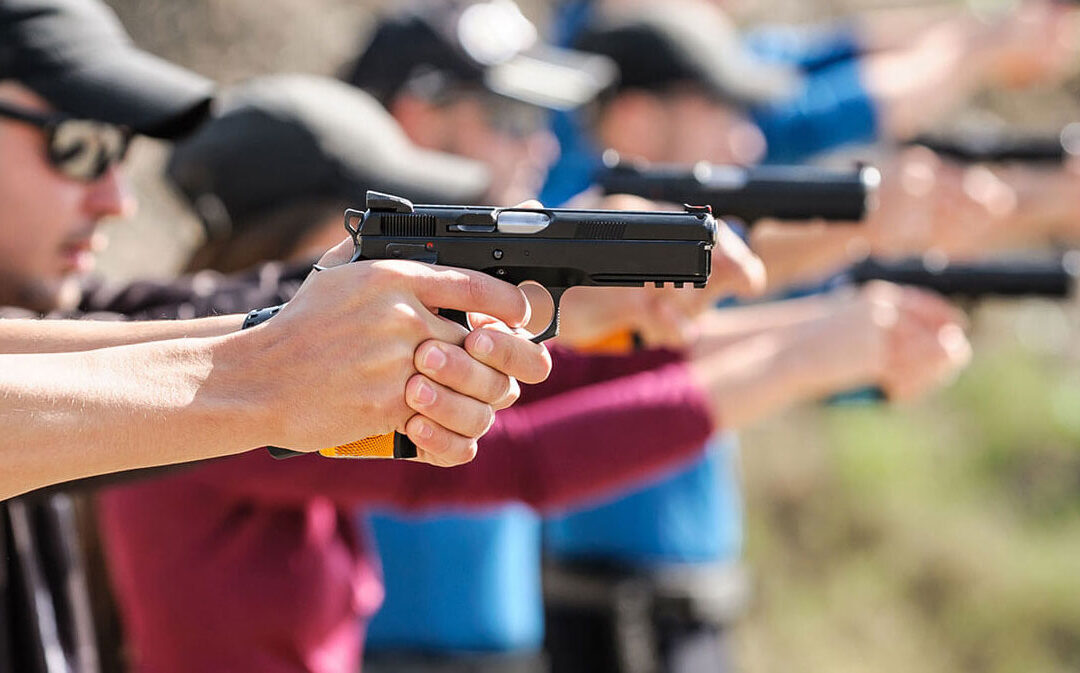
Most people think grip is simple: hold the gun tight. That mindset is exactly why so many shooters struggle.
Grip isn’t one action. It’s a two-part mechanism—two different jobs happening at the same time, in two different hands, with two different types of pressure. If you treat them the same, your shooting will always fight you.
The Problem With “Grip Harder”
“Just grip it harder” is bad advice.
When both hands apply the same kind of pressure, you get:
-Trembling sights
-Inconsistent trigger press
-Low-left or erratic hits (for right-handed shooters)
-Slower follow-up shots
Because both hands are trying to do the same job—and neither is doing it well.
Think Banana vs. Apple
Imagine you’re holding:
A banana in one hand and an apple in the other. If you squeeze the banana like the apple, you crush it. If you hold the apple like the banana, you drop it.
Same hands. Different pressure. That’s grip.
Your Strong Hand = Control, Not Crush
Your dominant hand is your control hand. It:
-Maintains alignment
-Manages the trigger
-Keeps the sights stable
-Firm—but not crushing.
This is your banana hand.
Your Support Hand = Power and Stability
Your support hand is your clamp. It:
-Locks the gun in place
-Controls recoil
-Drives the gun back on target
-High pressure. Aggressive contact.
This is your apple hand.
The GRIP Standard
At GRIP Defensive Training, we don’t teach “hold it tighter.”
We teach intentional pressure.
Strong hand: control
Support hand: pressure
Two hands. Two roles. One system.
DRILLS: BUILDING A FUNCTIONAL GRIP
You don’t fix grip by thinking about it—you fix it by training it.
Drill 1: Pressure Isolation (Dry Fire)
Purpose: Teach each hand its job.
How to do it:
Present the firearm (unloaded, safe direction)
Grip with your dominant hand only — press the trigger
Add your support hand and increase ONLY its pressure
Keep your dominant hand relaxed
What to look for:
Sights should move less when support hand pressure increases
Trigger press should feel cleaner
If your sights start shaking, your strong hand is overworking.
Drill 2: 60/40 → 30/70 Transition
Purpose: Find your optimal pressure balance.
How to do it (live or dry fire):
Start with equal pressure (50/50)
Shift to 60% support hand
Then 70% support hand
What to look for:
Where does recoil track the straightest?
Where do your sights return fastest?
Most shooters realize quickly: more support-hand pressure = more control.
Drill 3: One Shot, Reset, Rebuild
Purpose: Reinforce proper grip every rep.
How to do it:
Fire one round
Come off the gun slightly
Rebuild your grip intentionally (banana/apple)
Fire again
What to look for:
Consistency in sight picture
Consistency in recoil
Don’t just shoot—rebuild the habit every rep.
Drill 4: Support Hand Crush
Purpose: Build recoil control where it actually matters.
How to do it:
Grip normally with both hands
Increase support-hand pressure as hard as you can
Keep your strong hand relaxed
Fire controlled pairs
What to look for:
Less muzzle rise
Faster return to target
If your shots start pulling off target, your strong hand is taking over again.
Drill 5: Failure Check (Reality Test)
Purpose: Expose bad habits under speed.
How to do it:
Run a controlled string (3–5 rounds) at moderate speed
Pay attention to where your shots land
Common signs of failure:
Low-left (right-handed shooters) = too much strong-hand input
Wide groups = inconsistent pressure
Your target tells you the truth.
Final Thought
If your grip feels like one uniform squeeze, it’s wrong.
Grip is not about strength—it’s about distribution.
Banana. Apple.
Control. Pressure.
Train it correctly—and the gun starts working with you, not against you.